Report course 8: communication
This course focused on communication skills. In the introduction an overview of what communication is, is proposed. In the first chapter some general attitudes that are necessary in interactions are discussed. The second chapter addresses the difference between verbal and nonverbal communication and the third chapter provides an overview of listening skills. Different non-selective listening skills (facial expressions, eye contact, body language, encouraging gestures…) and selective listening skills (asking questions, paraphrasing, reflecting, emotional discovery…) are presented. The fourth chapter focuses on regulating skills (opening the conversation, feeding back to initial goals, clarifying the situation, thinking aloud, ending the conversation) and chapter five focusses on nuancing skills (nuanced empathy, confrontation, positive re-labeling and self-disclosure). At the end of the chapters about listening, regulating, and nuancing skills some common mistakes and tips and tricks are listed up. In the last chapter some common pitfalls related to interpretation are discussed.
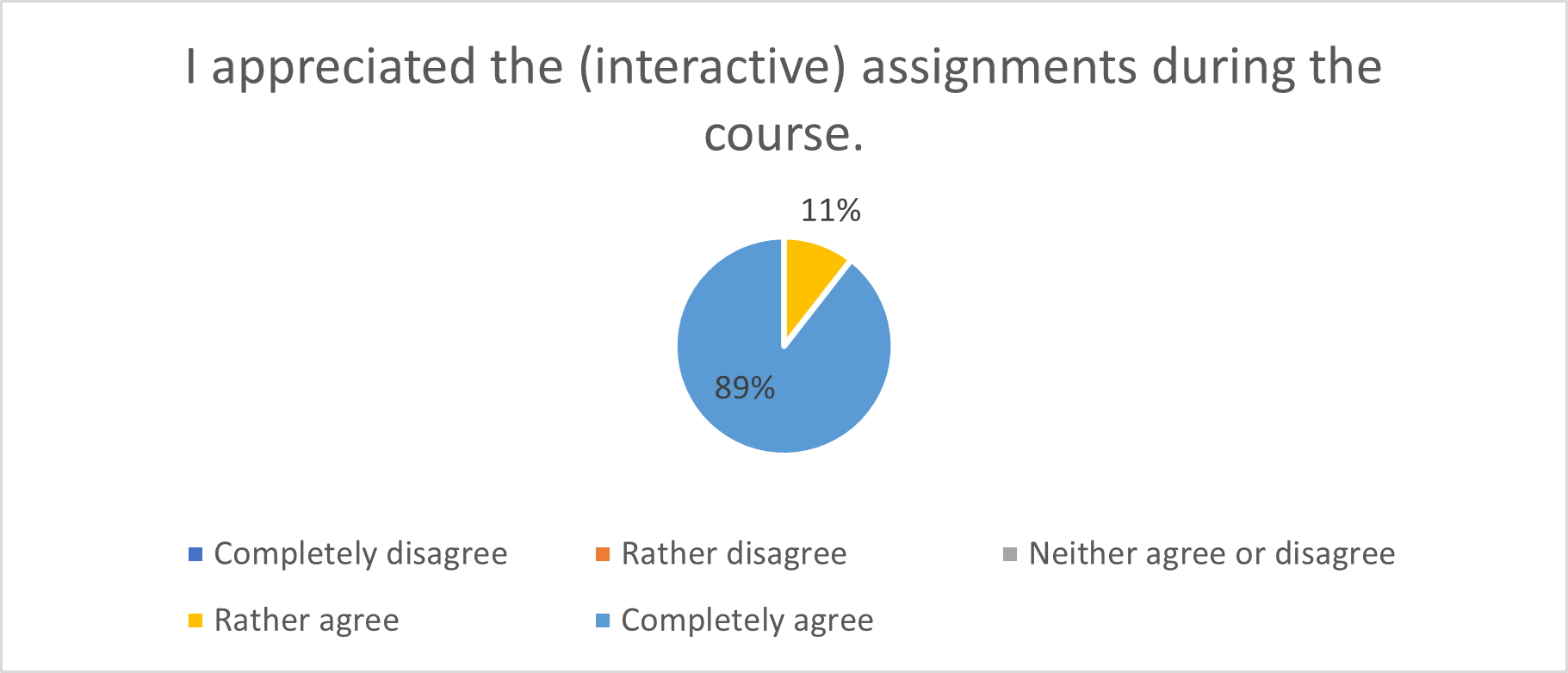
The information regarding participation, time, conditions, etc. prior to the course was clear for almost all the participants. Almost 80% of the participants responded with completely agree to this item and 18% with rather agree. Only 4% of the participants had no real opinion about it and responded with neither agree nor disagree. All the participants were positive about the understandability and relevance of the content of the course. They indicate that the course was well-organized and found the course attractively designed, sufficiently interactive and appreciated the (interactive) assignments during the course.
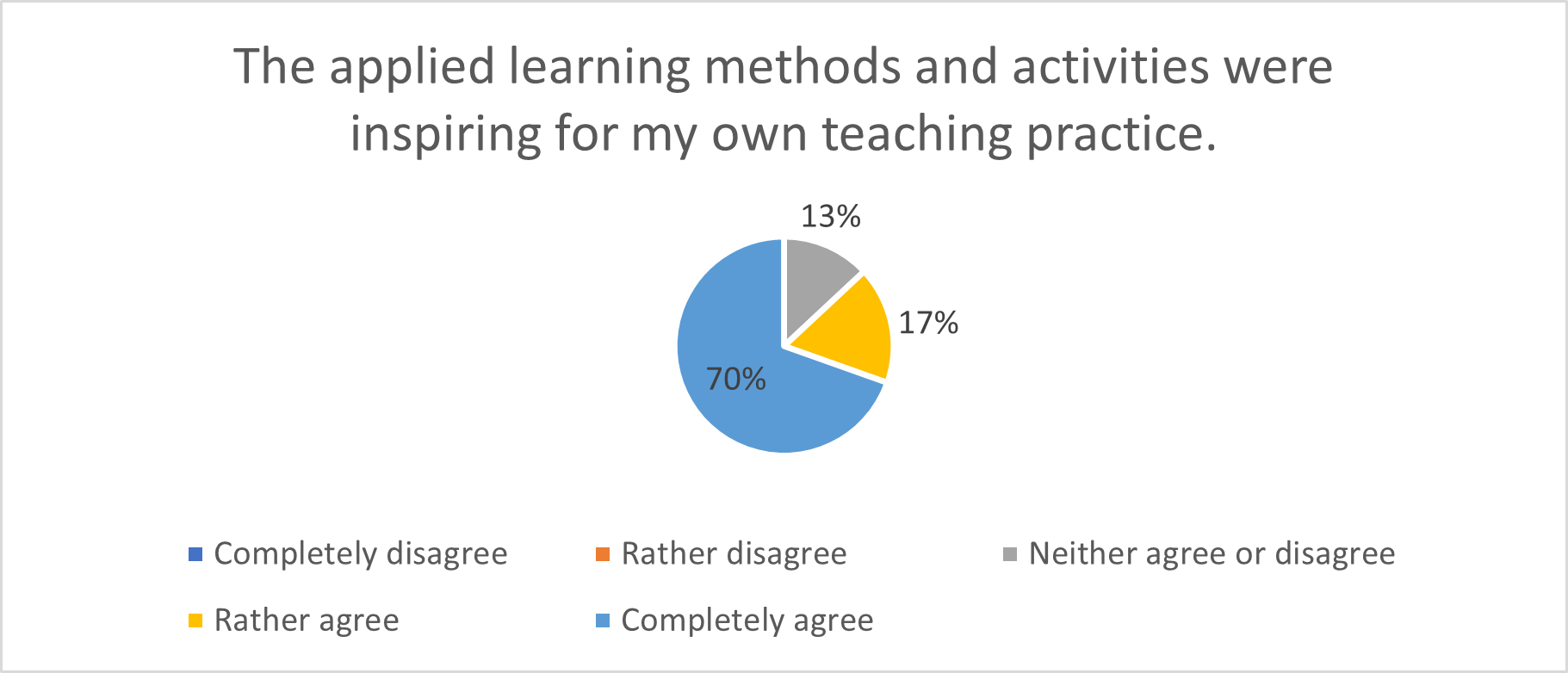
The participants moreover agreed that the course materials (syllabus and presentation) were clear, and that the visual material used during the course had an added value. All the participants responded with rather agree (5%) and completely agree (95%) on the item that the teaching methods and activities were well chosen and in line with the goals of the course. Not surprisingly, all the participants also mentioned that the course was cohesive and had a logical structure and that they learned new knowledge about occupational therapy. In line with that, almost all the participants indicated that the applied learning methods and activities were inspiring for their teaching practice (87%) and that they will integrate these learning methods and activities in their own teaching practice (82%). The participants who did not responded with rather agree or completely agree on these items, had no real opinion about it and responded with neither agree nor disagree.
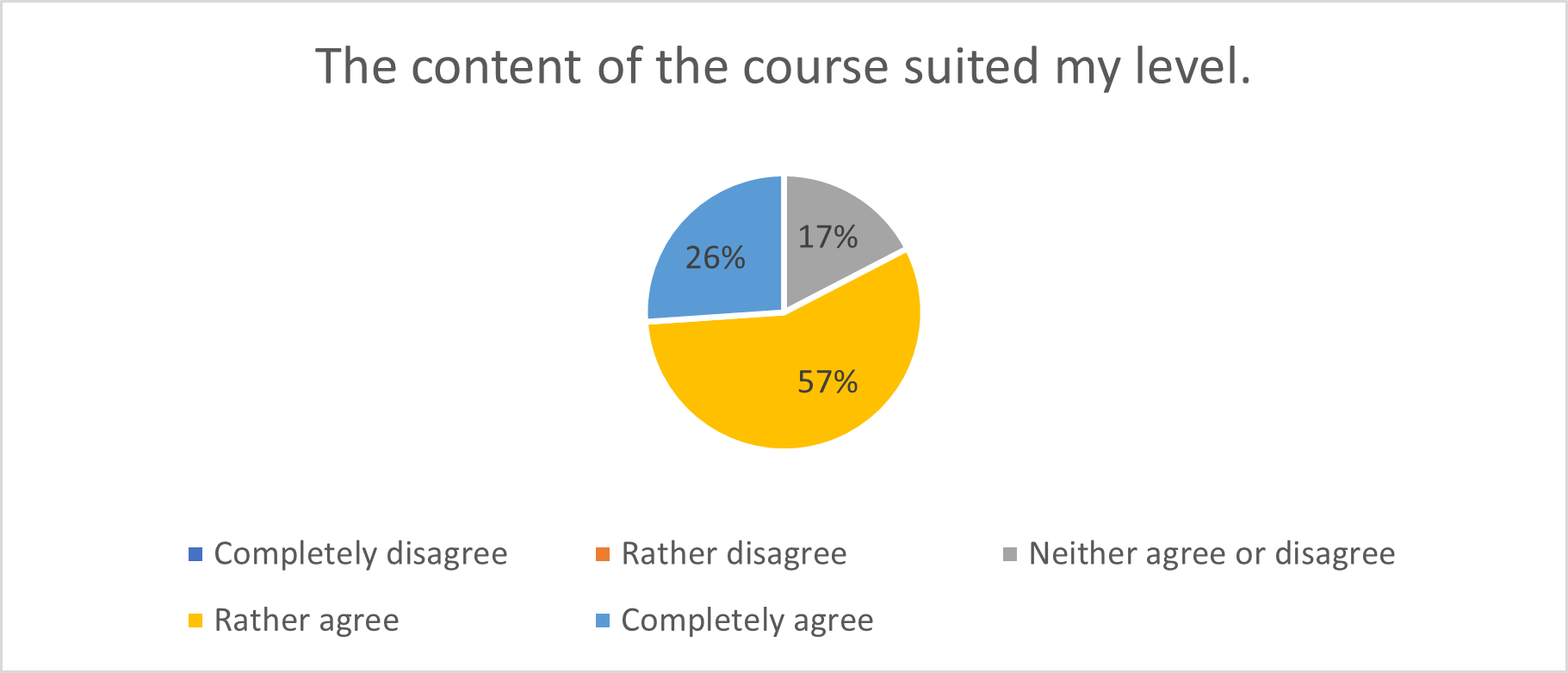
All the participants were extremely positive about the trainer. They found that the trainer was able to keep their attention during the course and was open to questions and feedback. The trainer is seen as someone with sufficient professional knowledge and didactic skills to teach the course and someone who made good translations from theory to practice. Almost 90% found that the language used during the course was clear. Eleven percent responded with neither agree nor disagree. This may be due to the specific terminology about communication skills used during the course. These specific words were not easy to translate at the moment of the course, as reported by some participants. This may also explain why almost 40% responded with neither agree nor disagree to the item that the course content fitted their prior knowledge. The other 60% responded with rather agree and completely agree. Despite that, the majority of the participants (on average 85%) found that the content of the course suited their level. Only 17% had no real opinion about it and responded with neither agree nor disagree.
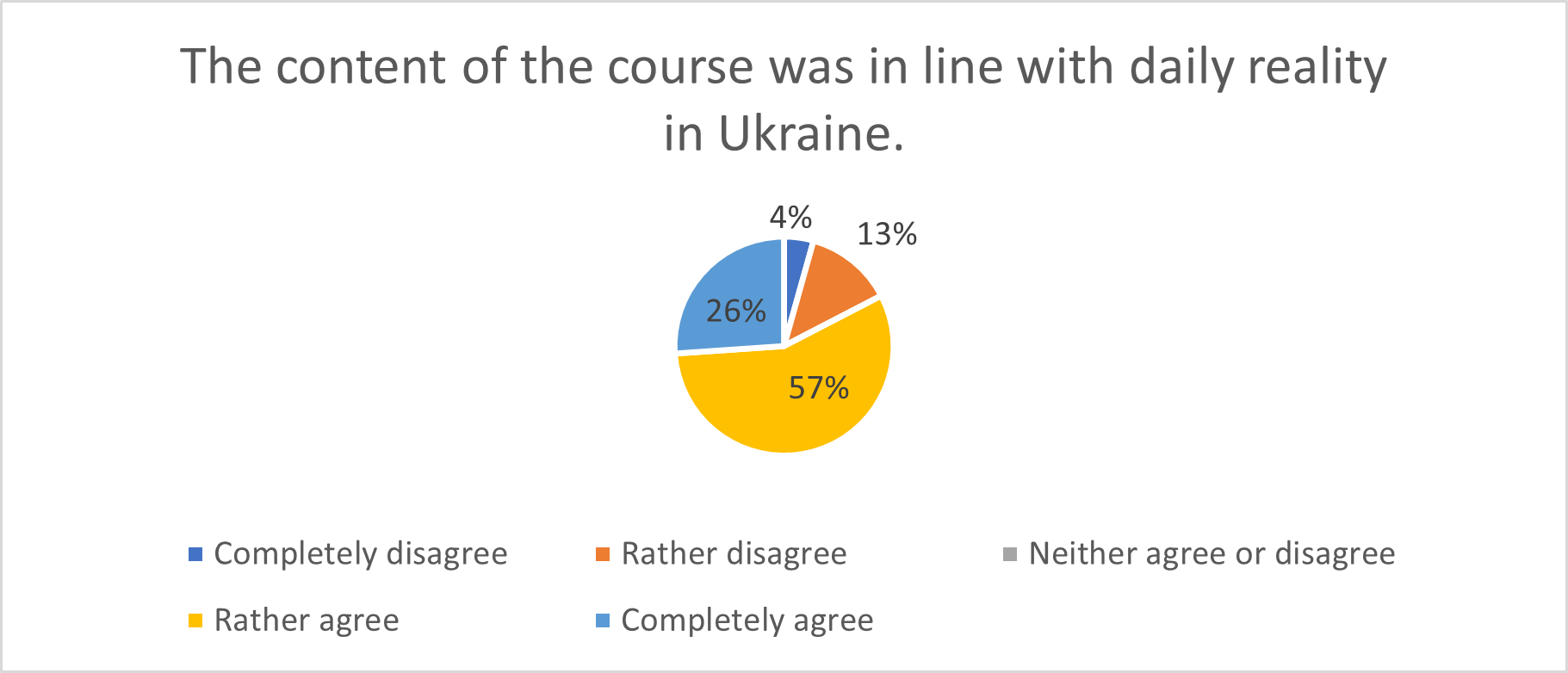
Almost all the participants (92%) indicate that during the course attention was paid to recent developments withing the field of occupational therapy. Only 4% responded with neither agree nor disagree and another 4% responded with rather disagree. The majority of the participants agreed that the content of the course was in line with the daily reality in Ukraine. Almost 20% did not agree with the majority and responded with rather disagree and completely disagree to this item. This can be linked with the situation of war Ukrainian people are dealing with.
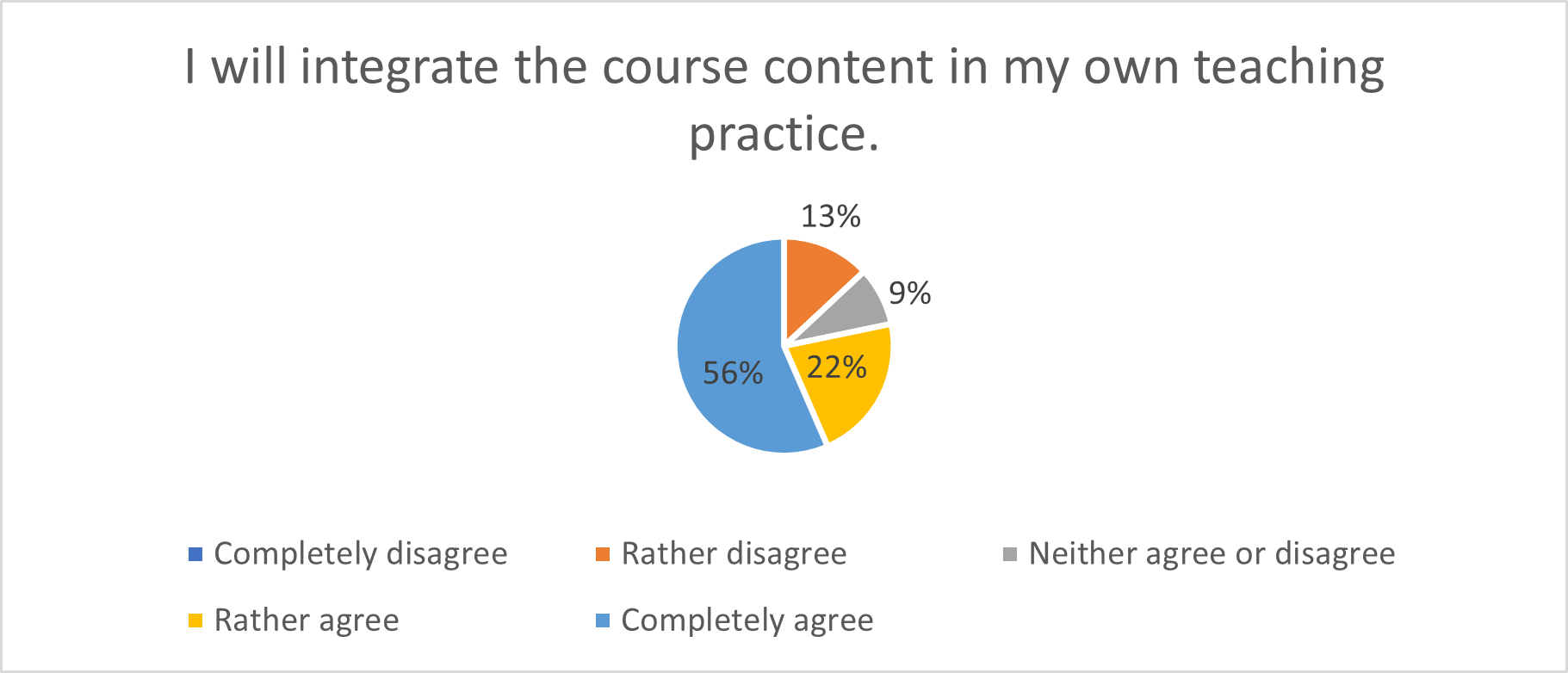
There is also a disagreement among the participants about the integration of the course content in their own teaching practice. Seventy-eight percent mentioned that they will integrate the course content in their own teaching practice. Thirteen percent indicate that they will not integrate it (and responded with rather disagree) and 9% did not expressed an opinion (and responded with neither agree nor disagree). Although we believe that it is the task of the teacher to make the transition to the daily reality in Ukraine in order to make the content of the course accessible for Ukrainian students, the war may hinder opportunities for doing this.